
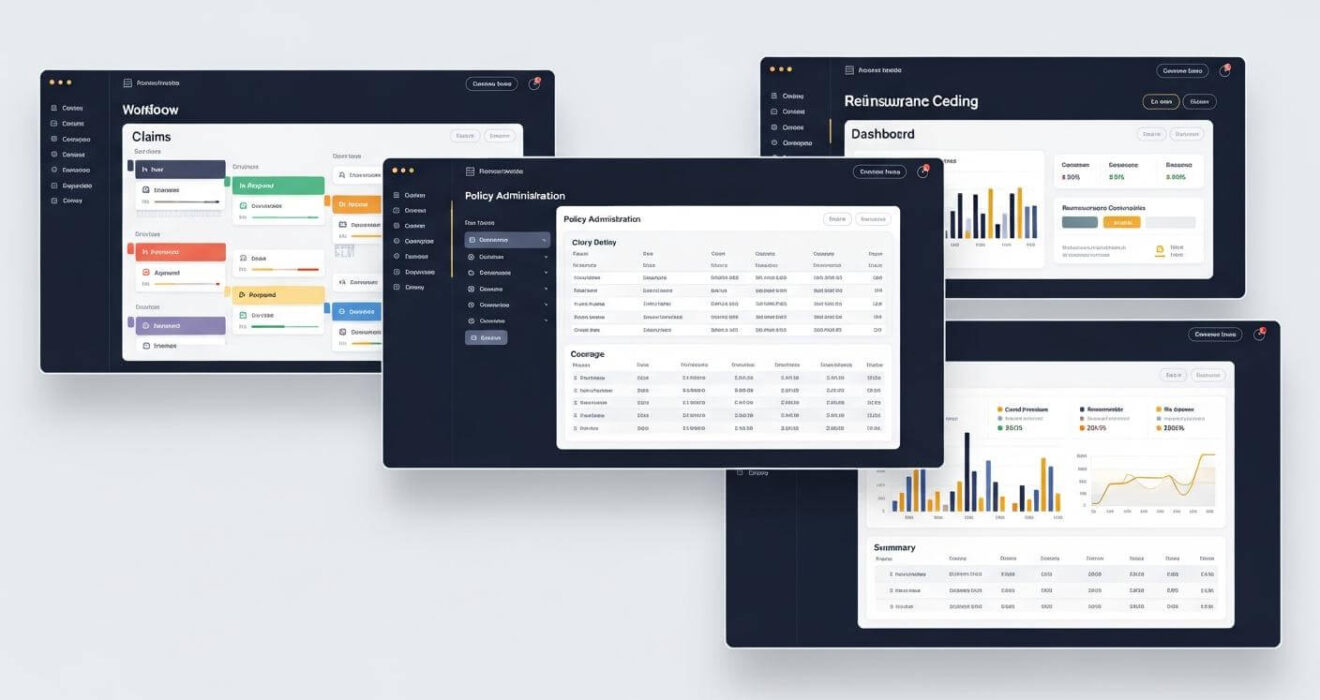
Understanding Guidewire Insurance Applications and Their Role in Digital Insurance
Introduction
The insurance industry manages complex business processes, including policy creation, underwriting, claims handling, billing, and customer service. As customer expectations and business requirements evolve, insurers increasingly rely on enterprise software to improve operational efficiency and manage these processes.
Guidewire provides software products designed to support property and casualty (P&C) insurance operations. Understanding the purpose of its core applications can help technology professionals learn how insurance systems work.
What Is Guidewire?
Guidewire is a technology provider serving the property and casualty insurance industry. Its software portfolio includes applications that support important insurance business functions.
The major core applications include PolicyCenter, ClaimCenter, and BillingCenter.
1. PolicyCenter: Policy Administration
Policy administration involves managing insurance policies throughout their lifecycle.
Typical business activities include:
-
Creating quotes and capturing policy information.
-
Supporting underwriting review and approval workflows.
-
Issuing new policies.
-
Processing endorsements and policy changes.
-
Managing renewals and cancellations.
For example, when a customer requests a new insurance policy, the system may support collecting the required information, evaluating the application, calculating a premium through the applicable pricing process, and issuing the policy after the necessary approvals.
2. ClaimCenter: Claims Management
Claims management involves handling requests made by policyholders following an insured event.
Typical activities include:
-
Recording a new claim.
-
Capturing incident and policy details.
-
Assigning claims to appropriate handlers.
-
Supporting investigation and assessment.
-
Tracking claim decisions and settlement.
-
Maintaining claim-related records.
For example, after a vehicle accident, a customer may submit a claim. A claims workflow helps authorised personnel review the information, assess the claim, request supporting documents, and process the decision according to the insurer’s procedures.
3. BillingCenter: Billing Management
Insurance billing involves managing premiums, invoices, payments, and outstanding balances.
Typical activities include:
-
Generating invoices.
-
Managing payment plans.
-
Recording and allocating payments.
-
Monitoring outstanding amounts.
-
Supporting billing adjustments and reconciliation.
For example, when a policyholder selects an instalment-based payment plan, billing workflows can help track scheduled payments and identify overdue amounts.
4. How These Applications Work Together
Consider a simplified insurance lifecycle:
-
A customer requests an insurance policy.
-
Policy administration workflows support quotation and policy issuance.
-
Billing workflows manage the premium and payment schedule.
-
If an insured event occurs, claims workflows support the claim process.
-
Related policy, billing, and claims information is managed through appropriate integrations and business rules.
The exact implementation depends on the insurer’s business processes, product configuration, integrations, and system architecture.
5. The Importance of Integration and Quality
Enterprise insurance applications often need to exchange information with customer portals, payment services, document management systems, reporting platforms, and other enterprise applications.
Successful implementation requires careful requirement analysis, appropriate integration design, data validation, security controls, testing, and release management.
Quality assurance is particularly important because errors in policy, claims, or billing workflows can affect business operations and customer experience.
6. Learning Insurance Technology
For developers entering this domain, a useful starting point is to understand insurance terminology and lifecycle processes before exploring platform-specific implementation.
Learners can begin with:
-
Basic policy, claim, and billing concepts.
-
Business requirements and workflow diagrams.
-
Database and API fundamentals.
-
Testing and defect management.
-
Enterprise application architecture.
-
Authorised training environments and platform-specific documentation.
Conclusion
Insurance technology combines business knowledge with software engineering. Understanding policy administration, claims management, and billing provides a useful foundation for developers interested in enterprise insurance applications.
Mahem Technologies is interested in insurance application development and technology learning, with the aim of supporting relevant projects and helping emerging professionals understand software engineering practices.
For additional information about Guidewire’s public product portfolio, visit https://www.guidewire.com/en/products/core-products.
Note: Guidewire is a third-party trademark. This article is an independent educational overview and does not imply an official partnership or endorsement.
